
Implantology has come a long way in the past ten years. In 2010, a dental implant required multiple visits, conventional X-rays, and a 6-month osseointegration period before any prosthetic restoration. Today, protocols have accelerated dramatically — without sacrificing safety or success rates.
The Complete Digital Workflow: From CT to Surgery
The most important revolution in implantology is the adoption of a 100% digital workflow. The process looks like this:
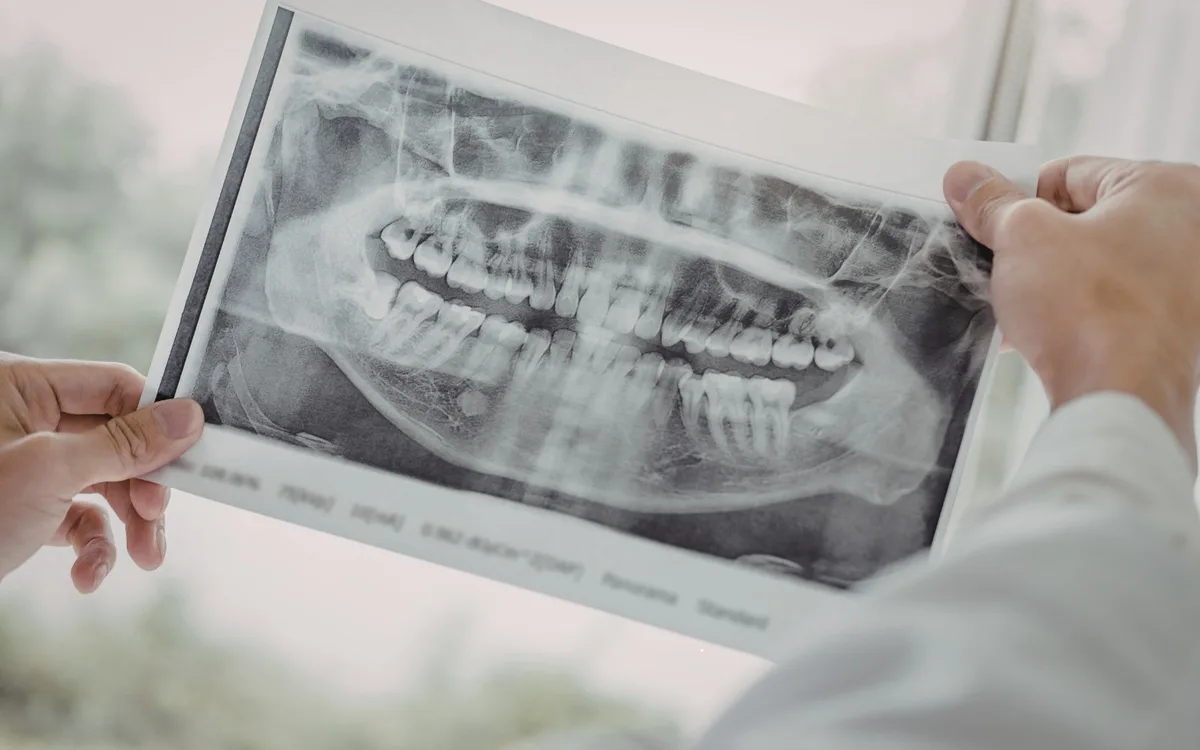
- CBCT (Cone Beam CT) — 3D tomography with reduced radiation doses compared to conventional medical CT, with submillimeter resolution for precise assessment of available bone.
- 3D planning software (Implant Studio, coDiagnostiX, Nobel Clinician) — the clinician virtually places the implants and anticipates the final outcome before entering the operating room.
- 3D-printed surgical guide — a custom template that guides the drills exactly along the digitally planned trajectory, eliminating human variables.
- Integrated prosthetic workflow — intraoral scanning, CAD/CAM crown design, laboratory or chairside milling.
The result: shorter, more precise procedures with far superior predictability compared to conventional techniques.
Same-Day Implants: Myth or Reality?
Immediate loading protocols — popularly known as “teeth in a day” — are a well-documented clinical reality. Studies published in the Journal of Oral Implantology and Clinical Implant Dentistry confirm success rates comparable to conventional implantology, provided patients are correctly selected.
Key criteria for immediate loading:
- Primary implant stability of at least 35 Ncm (tested with a torque meter)
- Adequate bone density (Misch class D1–D3)
- Absence of severe parafunctions (uncontrolled bruxism)
- Occlusally protected provisional
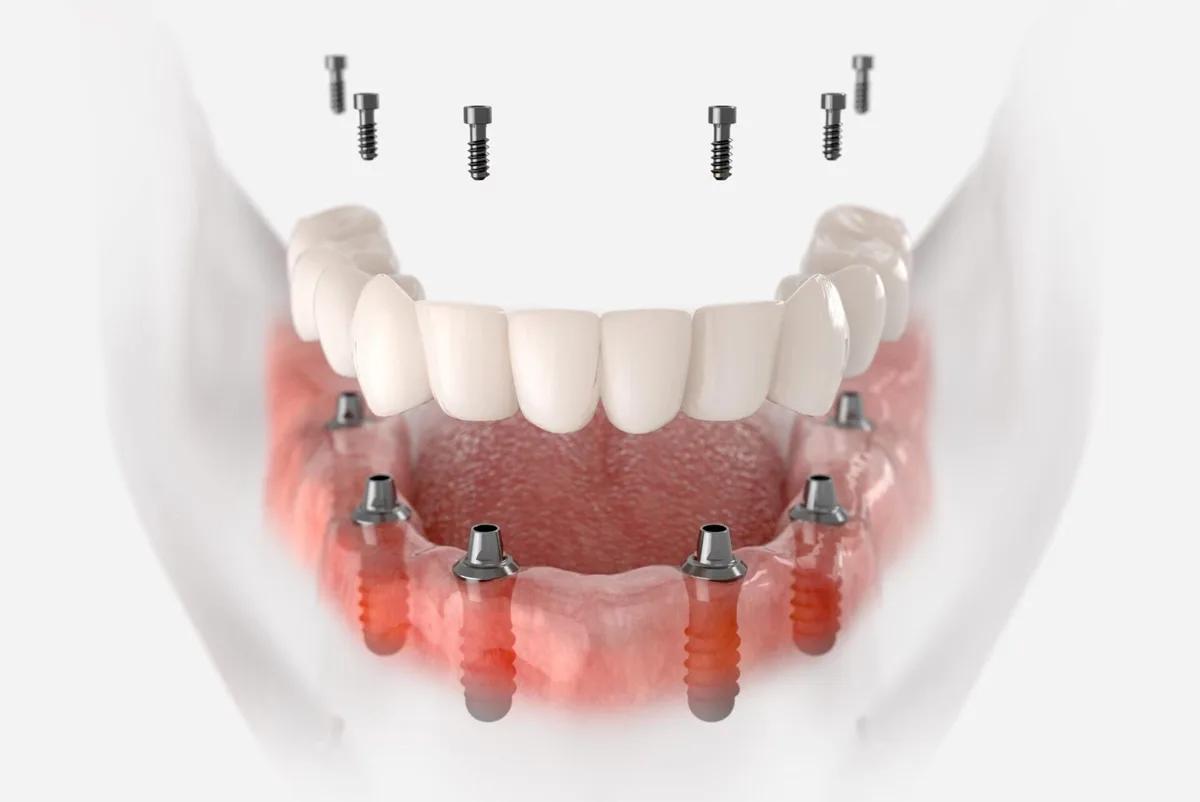
In Romanian clinics with a complete digital workflow, a fully edentulous patient can leave the clinic the same day with a functional fixed provisional arch — the basis of the All-on-4 or All-on-6 protocol with immediate loading.
Next-Generation Implants: Surfaces and Geometries
Major manufacturers (Straumann, Nobel Biocare, Osstem, Zimmer Biomet) have introduced in recent years implants with:
- Hydrophilic treated surfaces (SLActive by Straumann) — reduce osseointegration time from 12 to 6–8 weeks
- Tapered geometries with aggressive threads — superior primary stability in cancellous bone
- Internal morse taper connections — elimination of the bacterial micro-gap at the implant-abutment interface
- Short and wide implants — enable rehabilitation in areas with reduced bone volume without grafting
Artificial Intelligence in Implant Planning
Modern 3D planning platforms now integrate AI modules that automatically analyze bone density, suggest optimal implant positions, and estimate the risk of sinus perforation or inferior alveolar nerve injury.
Dentsply Sirona and 3Shape presented at IDS 2025 (Cologne) systems that reduce planning time for a complex case from 45 minutes to under 10 minutes, with accuracy superior to manual planning.
What This Means for Patients Coming to Romania
ClickDent partner clinics in Bucharest, Cluj, Timisoara, and other university centers have largely adopted the complete digital workflow. Patients from the UK, Germany, or the Netherlands benefit from:
- Digital planning sent pre-visit (they can see the virtual result before flying)
- Shorter and more predictable procedures
- Immediate loading protocols to reduce the number of trips
- Savings of 50–70% compared to prices in their home countries
Cutting-edge technology is no longer the exclusive domain of Western European clinics. Romania has rapidly closed the gap in equipment and training, offering European-quality treatments at significantly more affordable prices.