
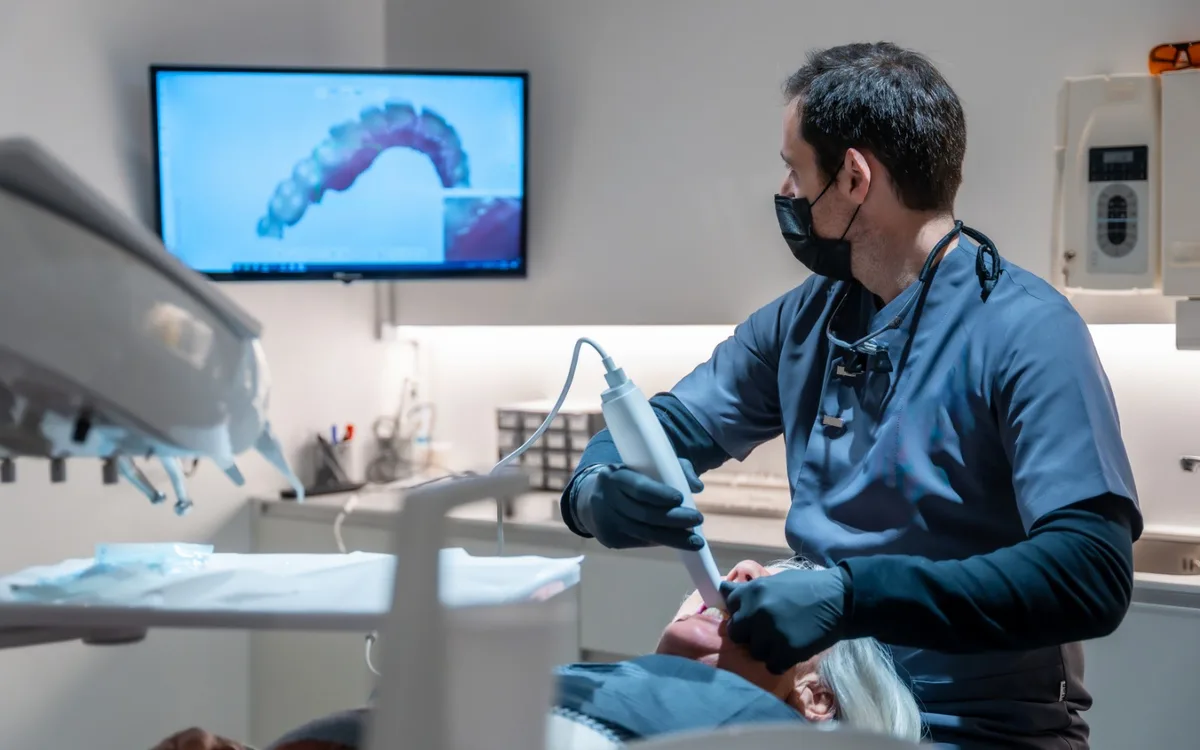
Artificial intelligence has entered medicine at a remarkable pace over the past five years — and dentistry is no exception. From automated X-ray analysis to AI-assisted implant planning, these tools are changing the way clinicians diagnose and plan treatments.
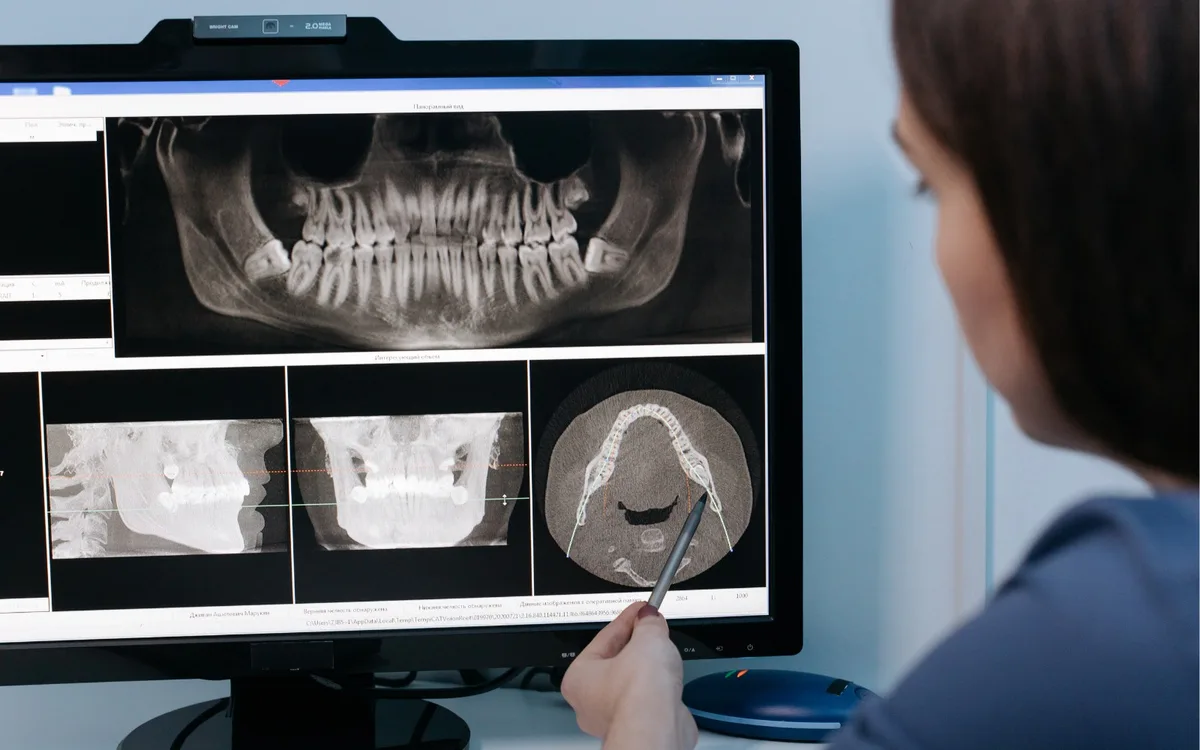
AI in X-ray Analysis: The Eye That Never Tires
The most advanced application of AI in dentistry is the analysis of periapical and panoramic X-rays. Platforms such as Pearl, Overjet, and Denti.AI use convolutional neural networks trained on millions of labeled radiographic images to:
- Detect interproximal caries with sensitivity and specificity >90%
- Identify peri-implant or periodontal bone resorption
- Highlight pulp calcifications, root fractures, and periapical lesions
- Automatically measure root lengths and crestal bone levels
A study published in the Journal of Dental Research (2024) demonstrated that AI systems detect incipient caries with accuracy comparable to dentists with over 10 years of experience, but with superior consistency (no inter-examiner variability).
AI-Assisted Planning for Complex Treatments
In implantology and orthodontics, AI assists with 3D planning:
Implantology: Modern platforms (Implant Studio + AI modules, Nobel Clinician) automatically analyze bone density from CBCT scans, suggest optimal implant positions, and calculate the risk of anatomical complications (maxillary sinus perforation, proximity to the inferior alveolar nerve). Planning time for an All-on-4 case has been reduced from 45–60 minutes to 10–15 minutes.
Orthodontics: Invisalign, OrthoFX, and other systems use ML algorithms to predict tooth movements and optimize the aligner sequence. AI can simulate the final treatment outcome with remarkable accuracy.
Prosthodontics: DSD (Digital Smile Design) software has integrated AI modules that analyze the patient’s facial proportions and automatically suggest tooth shapes and sizes harmonious with individual features.
Early Caries Detection: Beyond X-rays
Beyond imaging, AI has applications in caries diagnosis through:
- Intraoral photo analysis with AI cameras (Dentsply Primescan + AI modules) that detect color and texture changes suggestive of demineralization
- Laser spectroscopy (DIAGNOdent+AI) for quantifying demineralization in occlusal fissures
- Salivary analysis — early research on detecting cariogenic bacterial biomarkers through AI-powered biosensors
Current Limitations and Ethical Challenges
Dental AI also has important limitations to acknowledge:
- Dependence on training data quality: systems trained predominantly on North American populations may perform less well on radiographs from other demographic regions
- Explainability: clinicians need to understand why the AI flagged an area, not just what it flagged
- Medical liability: the final diagnosis remains the clinician’s responsibility; AI is an assistive tool, not a replacement
- Adoption costs: quality AI platforms have significant licensing costs, limiting access for smaller clinics
What This Means for Patients
The practical consequence for patients is earlier detection of problems — cavities caught at an incipient stage require much simpler and cheaper treatments than advanced ones. Additionally, more precise implant planning reduces the risk of complications and increases the predictability of outcomes.
ClickDent partner clinics in major cities are gradually adopting these tools, integrating them into existing workflows to offer a superior level of diagnostics and planning — direct benefits for every patient.